Traceability, recalls and batch manufacturing
What the rules actually ask for, what recent recalls reveal, and how batch operations break in practice. Written for quality and operations leads, not for search engines.
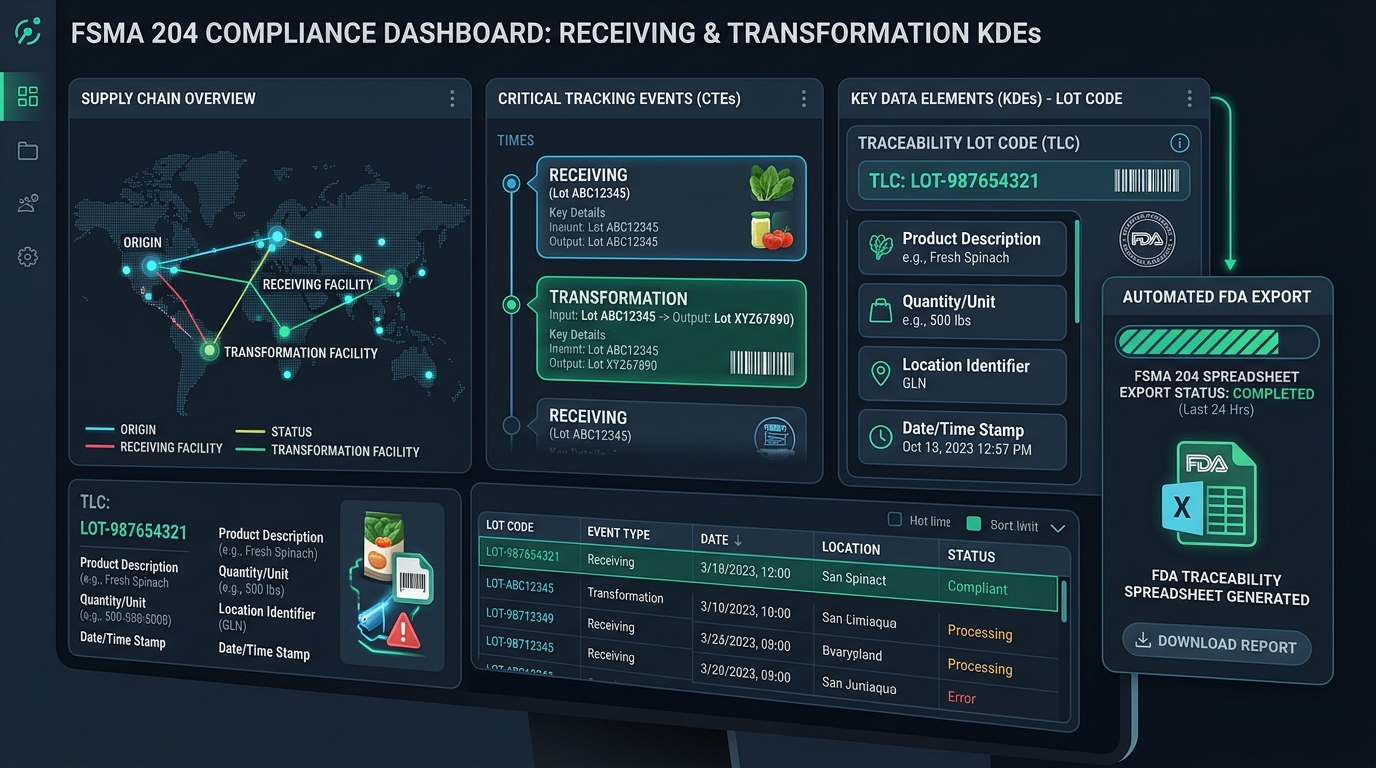
FSMA 204 Section 204(d) Receiving & Transformation KDEs: A Step-by-Step Guide for Food Processors
FDA FSMA 204 mandates capturing specific Key Data Elements (KDEs) for every Critical Tracking Event (CTE) across high-risk foods. Learn how food processors digitize incoming raw material receiving, transformation work orders, and 24-hour trace spreadsheets.
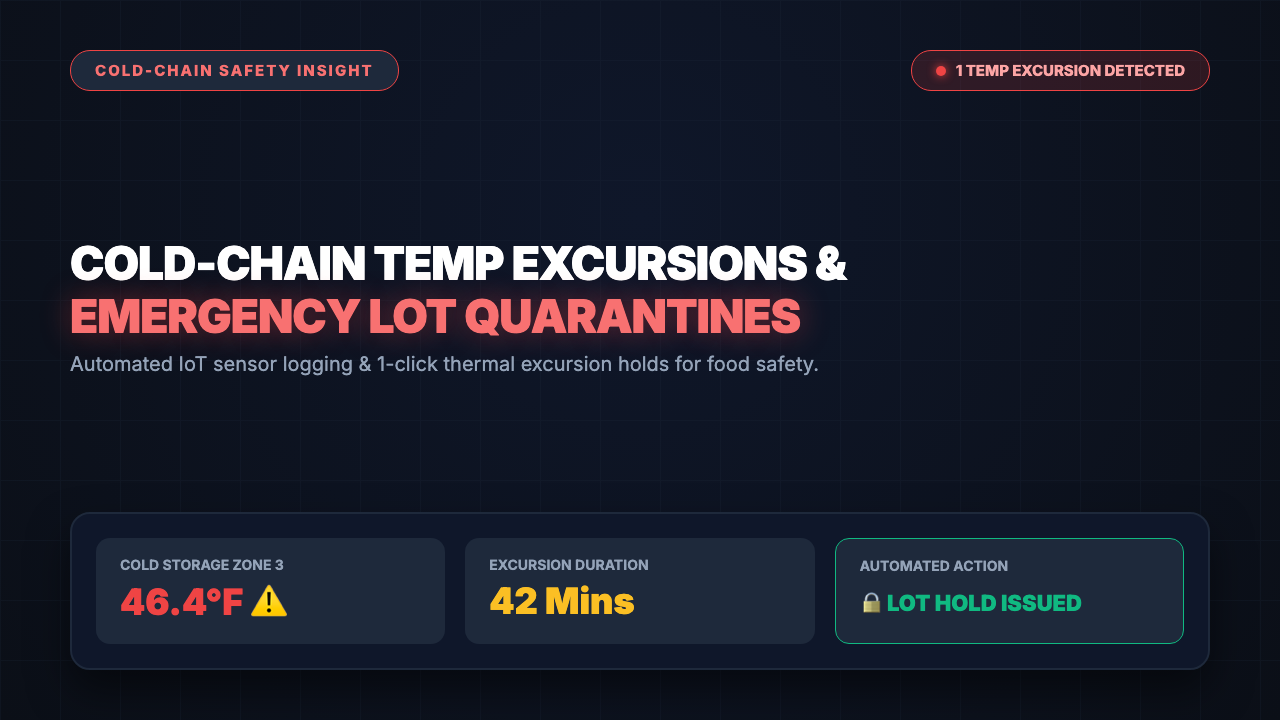
Cold-Chain Temperature Excursions & Expiry Recalls: Automating Sensor Logging & Emergency Lot Quarantines
Temperature spikes in refrigerated storage and transit jeopardize fresh dairy, meat, and produce safety. Learn how automated IoT sensor logging, temperature excursion alerts, and 1-click lot quarantines prevent mass product spoilage recalls.
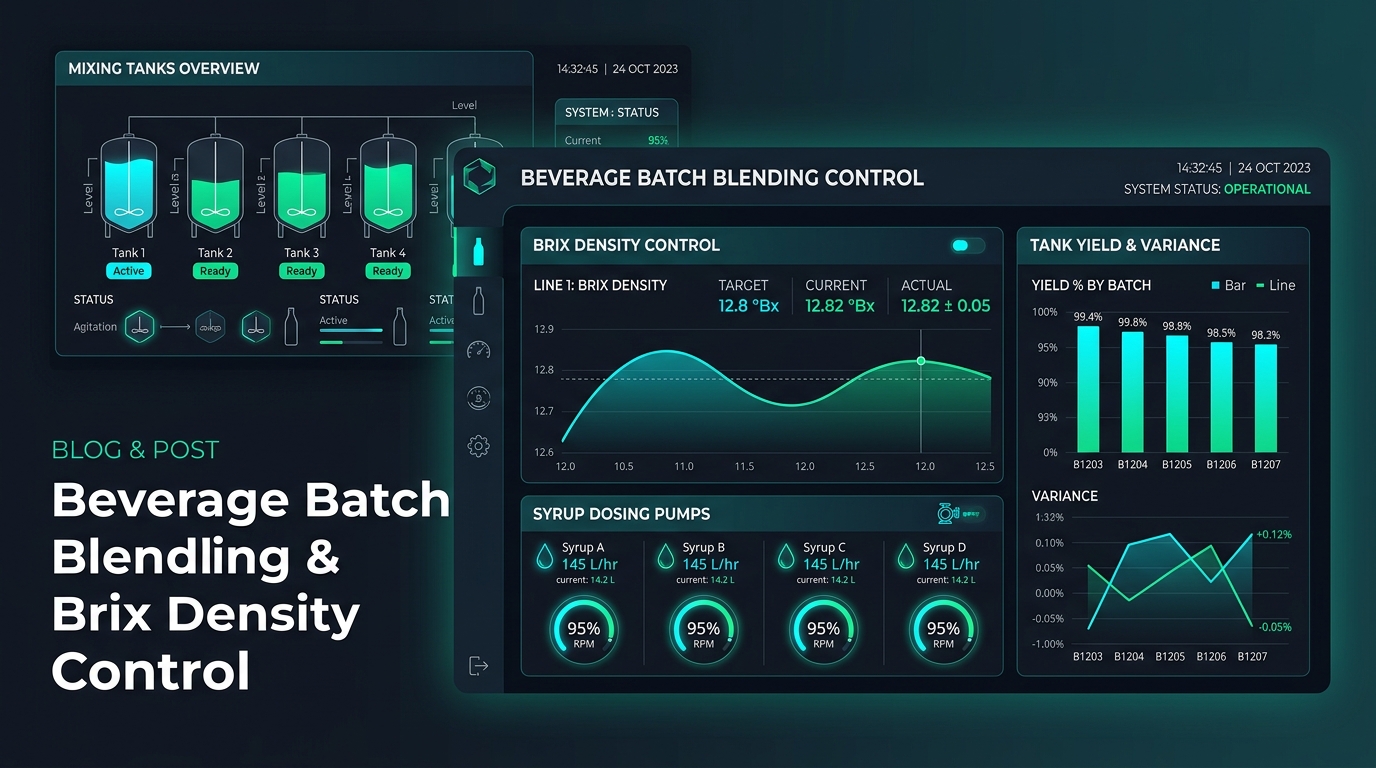
Beverage Batch Blending & Brix Density Control: Eliminating Syrup Spoilage & Tank Yield Variance
Beverage processors lose thousands in syrup over-dosing, uncalibrated Brix density readings, and tank flush waste. Discover how modern beverage bottling plants automate recipe scaling, tank lot genealogy, and Brix control with cloud ERP.
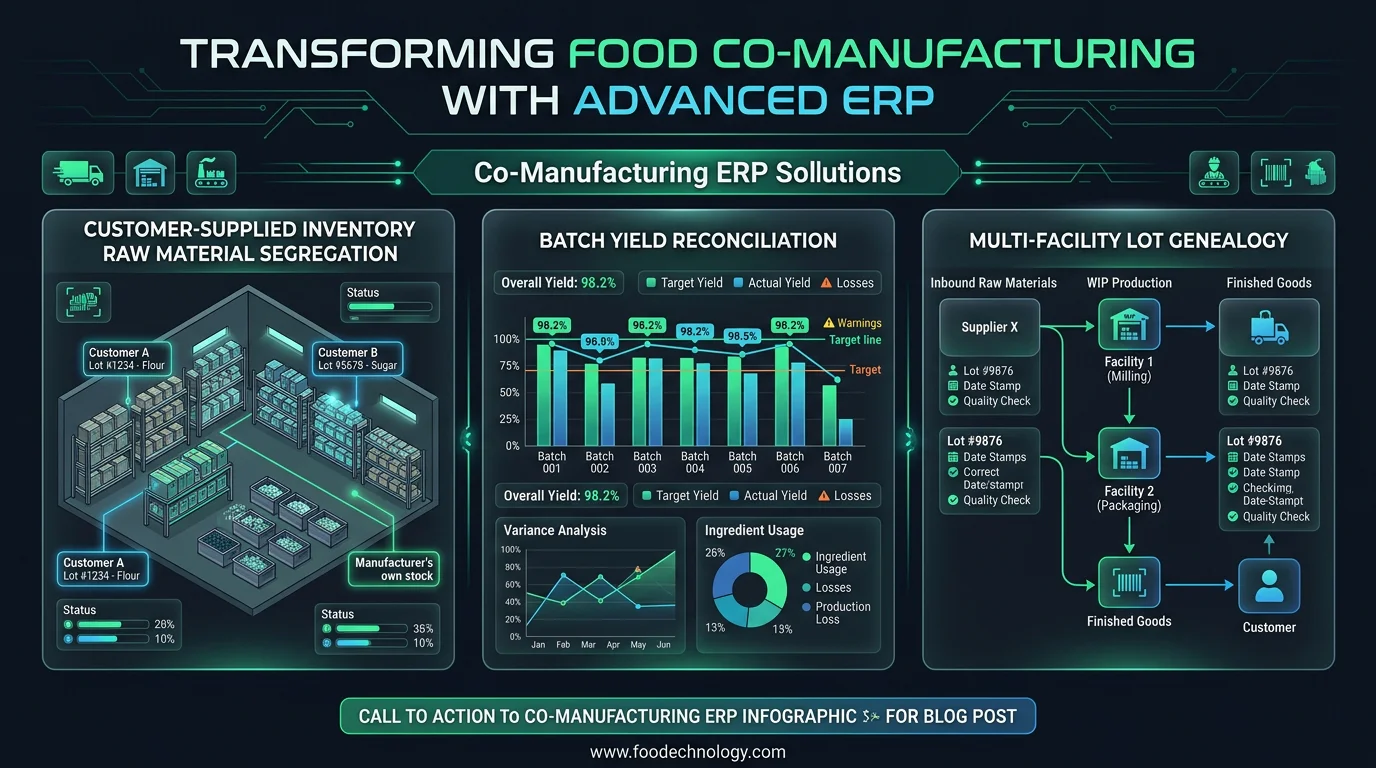
Co-Manufacturing Lot Tracking & COGS Control: A Guide for Brand Owners and Co-Packers
Managing customer-supplied inventory, tolling fees, and multi-facility batch yields creates operational friction for contract food manufacturers. Discover how co-packers and brand owners maintain real-time lot visibility and audit-ready traceability.
How Food Processors Conduct 2-Hour Mock Recalls to Satisfy FDA & GFSI Audits
Executing a mock recall within 2 hours is a mandatory requirement for SQF, BRCGS, and FSSC 22000 certifications. Learn how food and beverage manufacturers automate forward and backward lot tracing to achieve 100% material reconciliation under audit pressure.
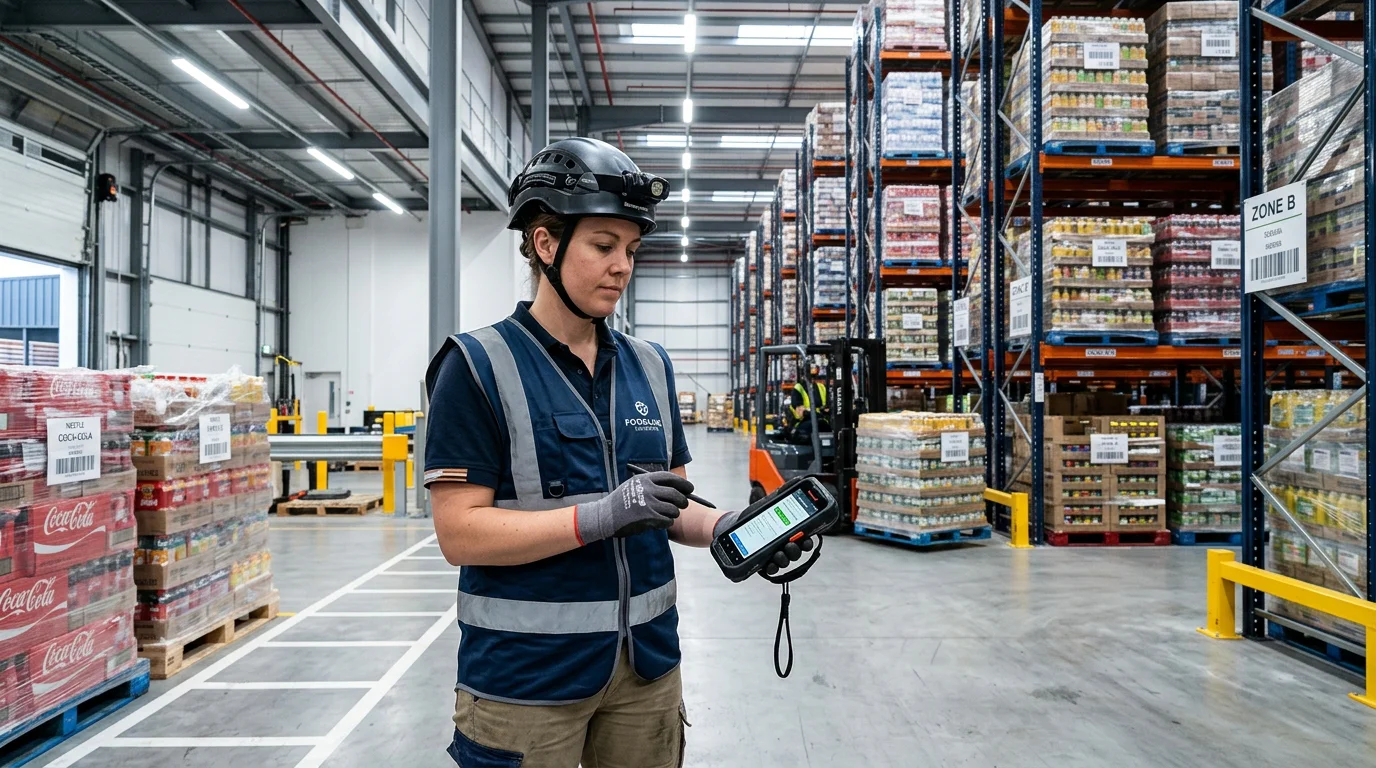
Electronic Batch Production Records (eBPR) for Supplement Manufacturers: 21 CFR Part 111 cGMP Guide
Paper batch production records slow down nutraceutical manufacturing and introduce costly transcription errors. Learn how supplement brand owners and contract manufacturers implement digital eBPR workflows to pass FDA 21 CFR 111 audits.
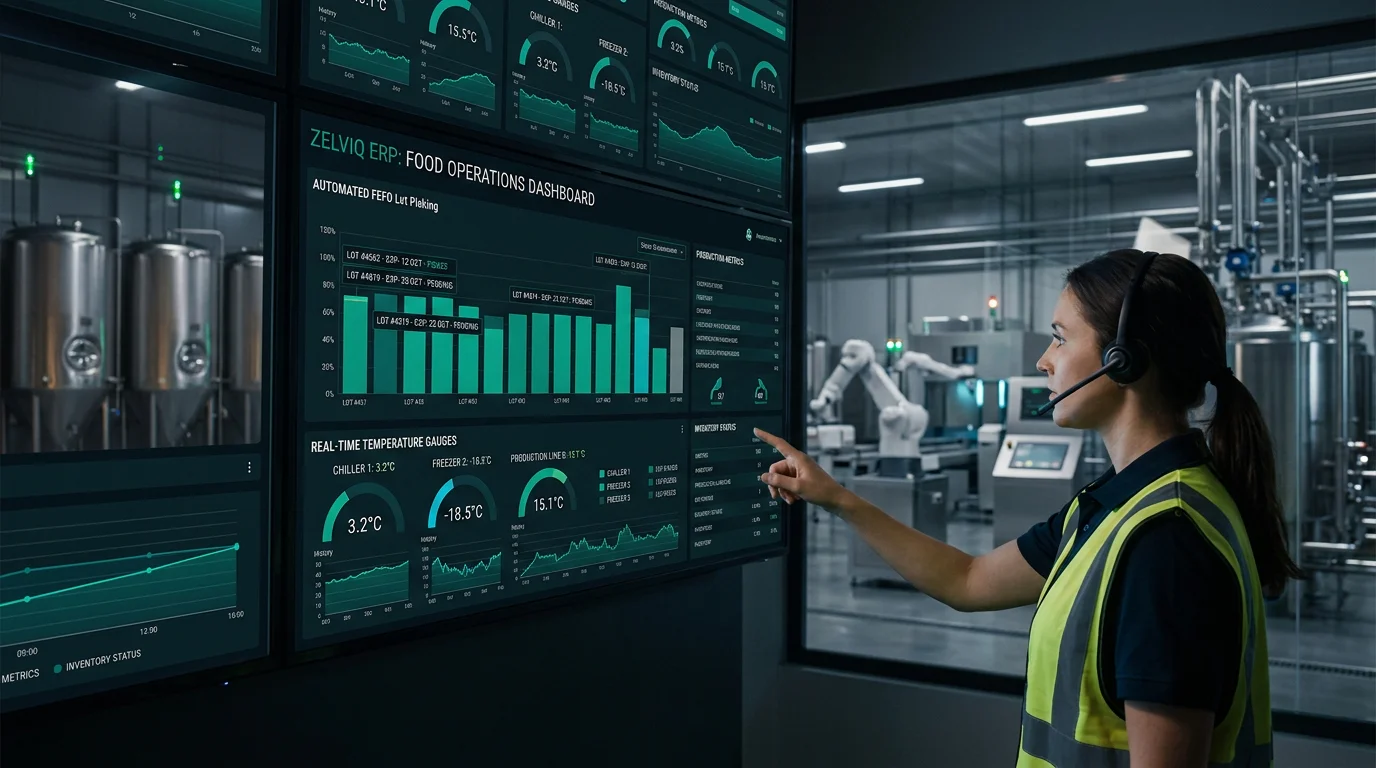
Why Modern Food & Beverage Processors Are Upgrading to Zelviq: The All-in-One Cloud Engine for FEFO, FSMA 204, and Digital Quality Control
Legacy spreadsheets and generalist ERP systems leave food manufacturers vulnerable to spoilage scrap, recall fines, and audit failures. Discover why fast-growing food processors choose Zelviq to automate FEFO picking, 1-click lot quarantine, and FSMA 204 KDE compliance.
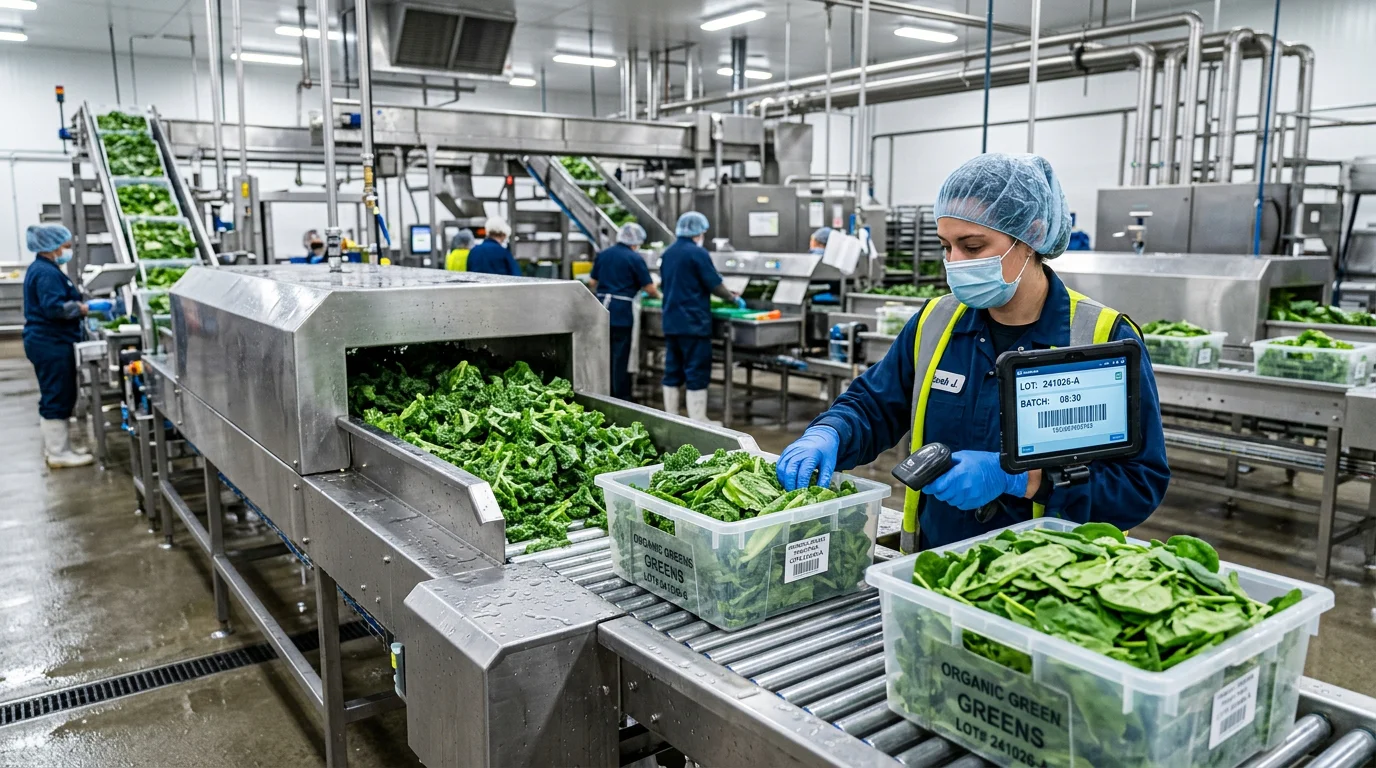
E. Coli Outbreaks in Fresh Produce & Leafy Greens: Automating Farm-to-Fork Lot Lineage & Water Testing Records
Multi-grower field lot blending makes fresh produce recalls complex. Discover how automated farm-to-fork lot genealogy and FSMA 204 TFL data elements isolate contaminated batches in seconds.
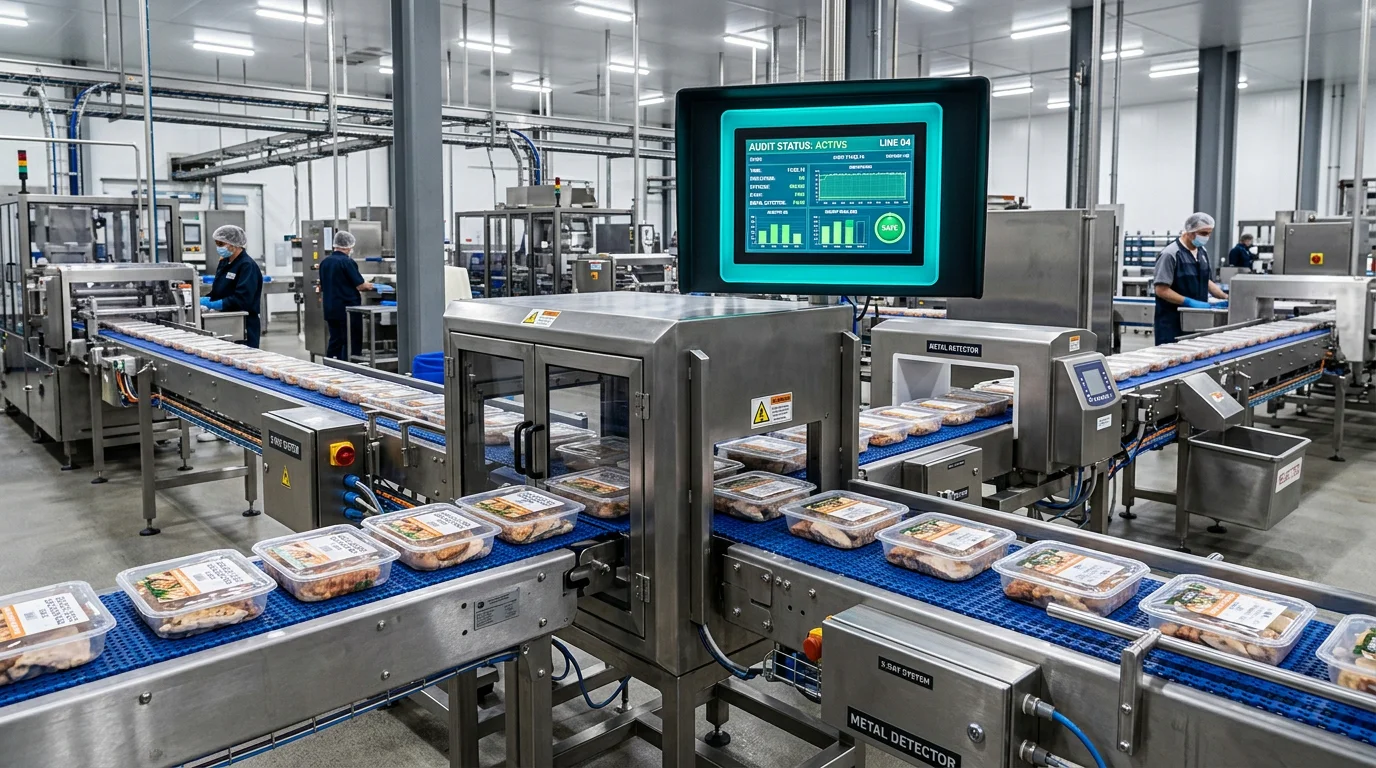
Metal Contamination & Foreign Body Recalls: Implementing Digital Magnet & X-Ray Inspection Logs for SQF Audits
Foreign body contamination remains one of the top causes of FDA physical hazard recalls. Learn how digitizing CCP metal detection logs and automated lot hold prevents costly product withdrawals.
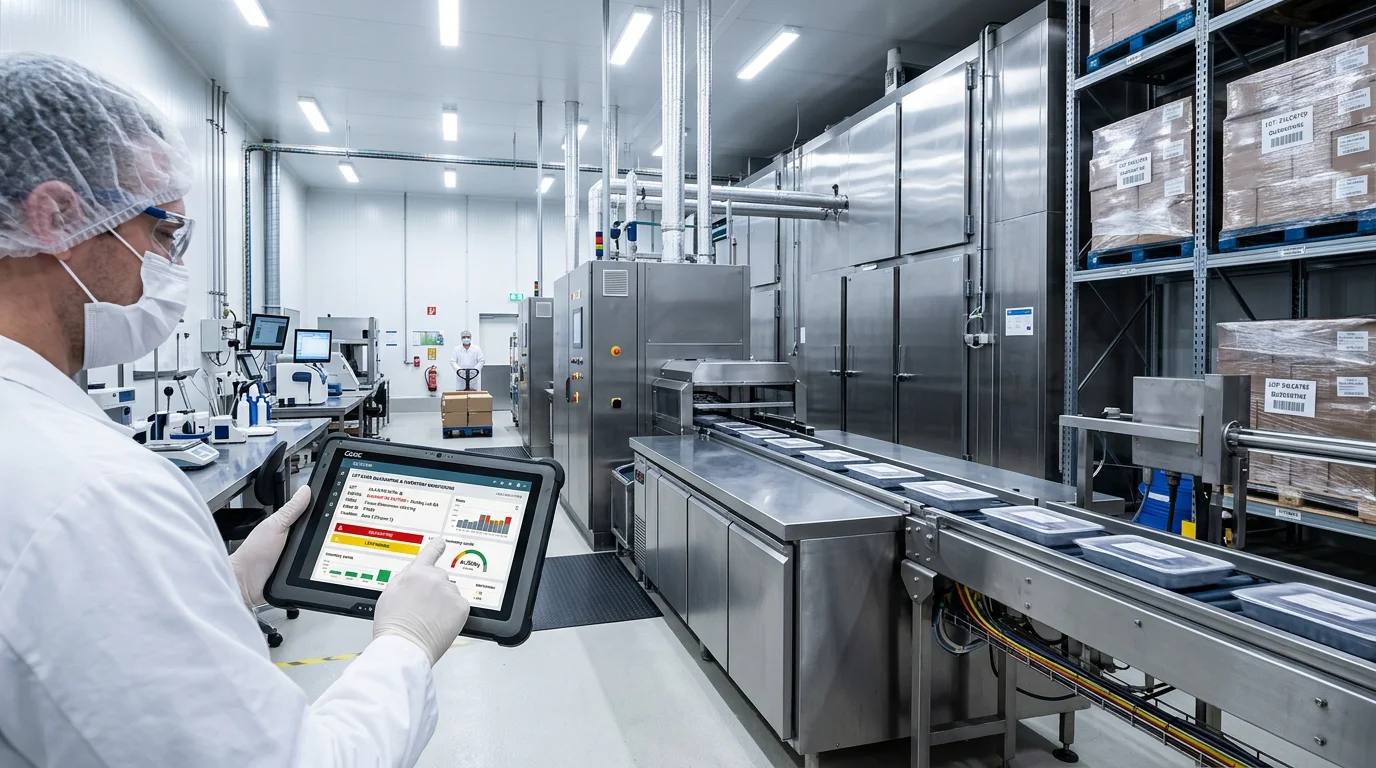
Listeria Monocytogenes Outbreaks: Lessons in FEFO Stock Rotation & Emergency Lot Hold Automation
Recent high-profile Listeria recalls highlight how slow lot identification spreads contamination across retail distribution. Discover how automated FEFO stock rotation and instant 1-click lot holds protect consumer safety and brand equity.
FEFO vs FIFO in Food Manufacturing: How Expiry-Driven Picking Prevents COGS Spoilage & Audit Penalties
Relying on FIFO instead of FEFO costs food & beverage manufacturers millions in annual ingredient spoilage and retail short-shelf chargebacks. Compare FIFO vs FEFO picking strategies and learn how to automate expiry-driven allocation.
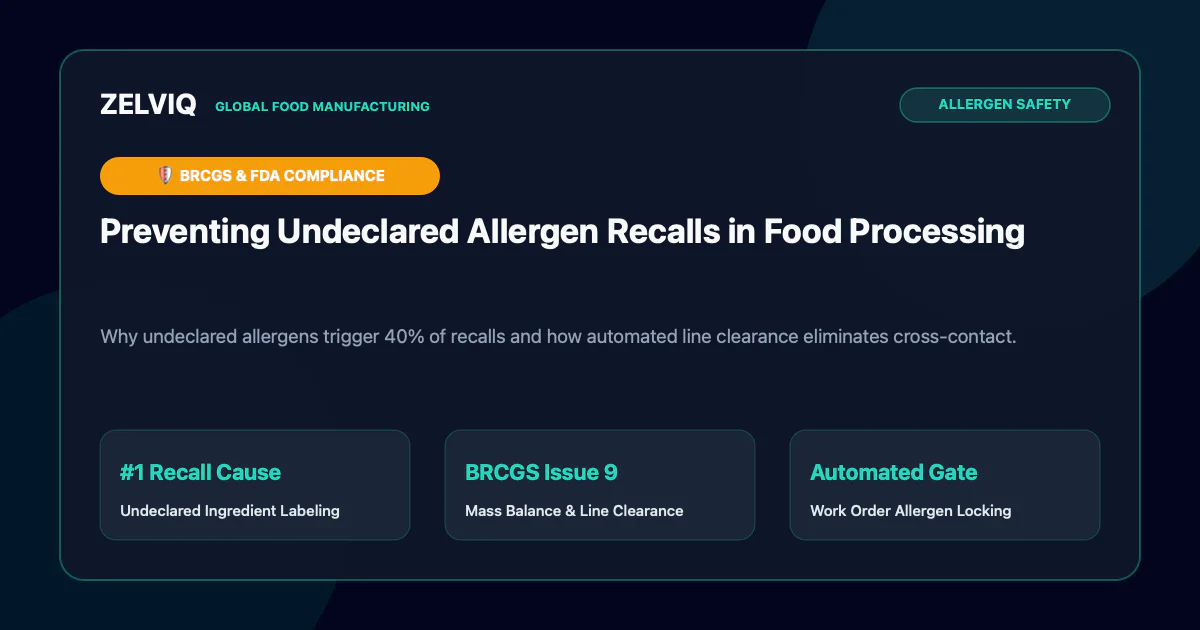
Preventing Undeclared Allergen Recalls: How Batch Manufacturers Automate Line Clearance & Changeover
Why undeclared allergens remain a leading cause of food recalls in the US and UK, and the line clearance, cleaning verification and packaging checks that prevent them.
What Salmonella Recalls Reveal About Mass Lot Containment in Food Processing
How one contaminated ingredient lot multiplies through batch production, and how forward and backward lot tracing keeps a recall to the lots that are actually affected.
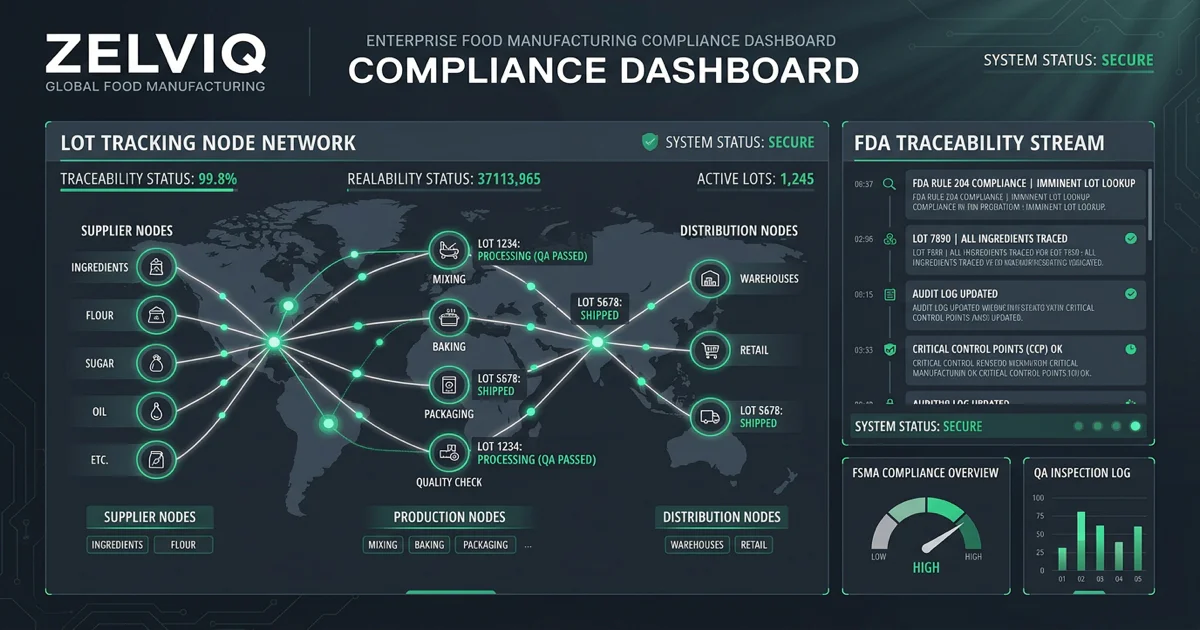
FSMA 204 Critical Tracking Events: How Food Manufacturers Master CTE & KDE Recordkeeping
The Key Data Elements FSMA 204 requires at receiving, transformation and shipping, the mistakes that break a trace, and how to answer an FDA records request within 24 hours.
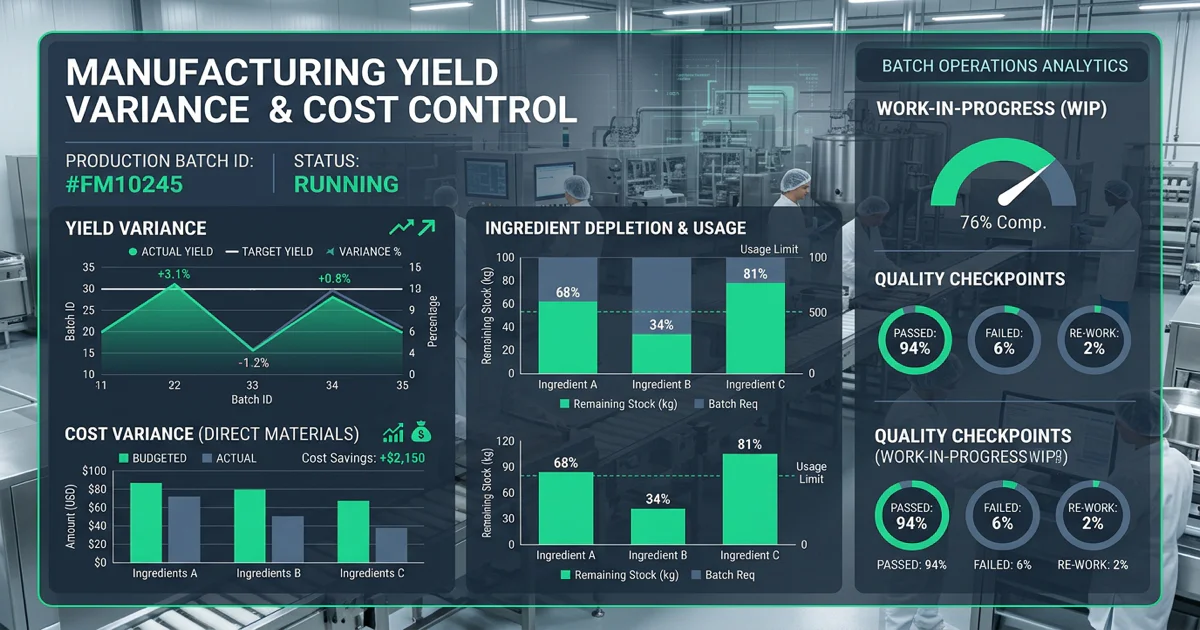
The Real Cost of Batch Yield Variance: How Food & Beverage Manufacturers Eliminate Hidden Material Losses
Why standard costing hides real ingredient losses in batch production, how to calculate yield variance and a mass balance, and how to find where the missing material goes.
Have a question these do not answer?
We would rather talk through your actual situation than send you more reading. Tell us what you are wrestling with.
Talk to an Expert