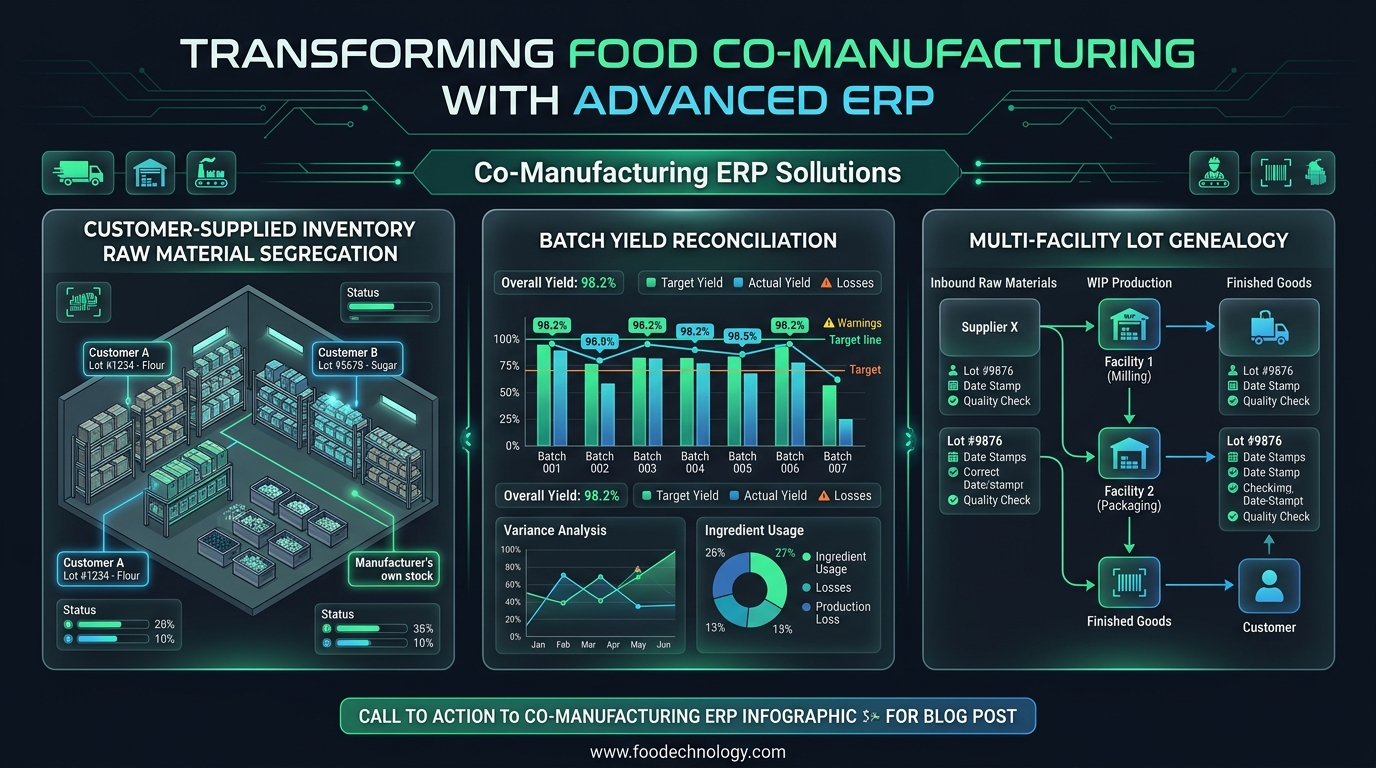
In dietary supplement and nutraceutical manufacturing, compliance with FDA 21 CFR Part 111 (Current Good Manufacturing Practice in Manufacturing, Packaging, Labeling, or Holding Operations for Dietary Supplements) is mandatory.
Under 21 CFR 111, manufacturers must prepare and execute a Master Manufacturing Record (MMR) for every unique formulation and batch size, and document every step in a Batch Production Record (BPR).
Paper BPR binders are notoriously slow, prone to illegible handwriting, and vulnerable to missed quality sign-offs. Transitioning to Electronic Batch Production Records (eBPR) streamlines plant floor execution and dramatically accelerates quality release.
In this guide, we outline the regulatory requirements of 21 CFR 111 and demonstrate how digital eBPR workflows operate.
1. Regulatory Anatomy of a 21 CFR 111 Batch Record
Under FDA regulations, a compliant supplement Batch Production Record must contain:
- Master Manufacturing Record (MMR) Alignment: Exact match to the approved formulation version, including botanical potencies and active ingredient targets.
- Raw Material Component Lot Capture: Full identity, supplier lot number, and internal lot number for every vitamin, mineral, botanical, and excipient added.
- Actual Weighments & Measure Verification: Documented tare weights, actual weights, and dual-operator or digital scale verification.
- In-Process Quality Control (IPQC) Logs: pH, disintegration times, capsule weight variation, bottle fill counts, and seal integrity checks.
- Yield Reconciliation: Calculation of actual yield vs. theoretical yield at each stage (blending, encapsulation/tableting, bottling, packaging).
- Quality Control Sign-Off: Documented review and release by the quality control unit prior to finished goods distribution.
2. Advantages of Digital eBPR Workflows
Transitioning from paper binders to an integrated supplement ERP provides immediate operational benefits:
- Zero Missing Sign-Offs: Work order steps cannot advance until required weights and QA signatures are captured.
- Automated UOM & Potency Adjustments: System calculates raw ingredient active assay adjustments (e.g. adjusting raw botanical weight based on CoA assay potency).
- Review-by-Exception: Quality teams review only flagged out-of-spec parameters rather than auditing 40-page paper binders manually.
3. How Zelviq Powers Supplement Manufacturing
💊 Streamline 21 CFR 111 cGMP Compliance & Quality Release
Replace paper batch binders with version-controlled eBPRs, automated ingredient lot genealogy, and instant quality release controls in Zelviq.
👉 Explore Zelviq Supplement ERP Solution | Book a Live Nutraceutical Walkthrough
Conclusion
Paper batch records belong in the past. By digitizing MMR formulations and implementing Electronic Batch Production Records (eBPR), supplement manufacturers eliminate compliance risk, shorten batch release cycles, and scale production seamlessly.
Found this article valuable?
Share it with your operational team and industry peers.