Outbreaks of Shiga toxin-producing Escherichia coli (STEC O157:H7 and non-O157 strains) in fresh produce - specifically romaine lettuce, spinach, alfalfa sprouts, and pre-packaged salad blends - represent one of the most complex traceability challenges in modern food processing.
Because fresh-cut vegetables have short shelf lives (7 to 14 days) and undergo rapid regional distribution, an E. coli contamination incident demands instant, precision lot isolation. When raw agricultural commodities from multiple farm fields are washed and bagged together, traditional paper logs break down, leading to massive, multi-state commodity recalls that devastate agricultural supply chains.
In this article, we examine the operational complexities of fresh produce lot lineage, review FDA FSMA 204 Traceability Food List (TFL) requirements, and outline how digital farm-to-fork ERP controls stop outbreak escalation.
1. The Multi-Grower Blending Problem in Fresh-Cut Operations
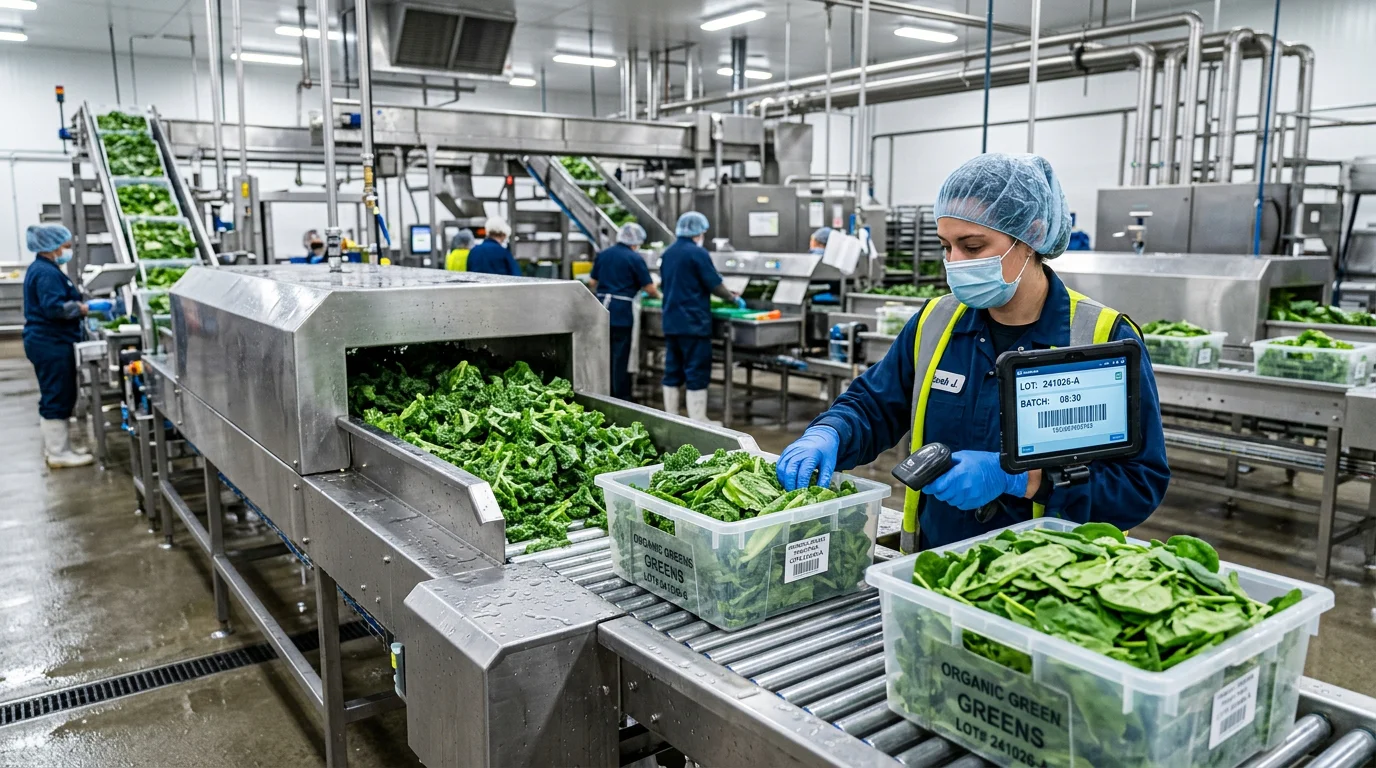
The fundamental vulnerability in fresh produce processing is field lot pooling. Consider a standard fresh-cut packaging line:
+-----------------------------------------------------------------------------+
|                      FRESH PRODUCE WASH & BLEND CASCADE                     |
+-----------------------------------------------------------------------------+
| Grower A (Field Lot #101) --+                                               |
| Grower B (Field Lot #204) --+--> [Flume Wash Tank] --> [Multi-Head Scale]  |
| Grower C (Field Lot #309) --+                                               |
+-----------------------------------------------------------------------------+
                                       |
                                       v
+-----------------------------------------------------------------------------+
|  [Finished Bagged Salad SKUs]  --> [Regional Retail Distribution]           |
|   (Assigned Output TLC)             (24-Hour FSMA 204 Electronic Trace)     |
+-----------------------------------------------------------------------------+
Why Manual Tracing Fails:
- Wash Tank Cross-Contamination: If water sanitizer levels (free chlorine, peracetic acid, or ORP) dip below critical thresholds during a wash cycle, a single contaminated harvest tote transfers bacteria to every leaf passing through the flume.
- Co-Mingled Field Lots: If three grower lots enter a 2-hour production run without real-time transformation logging, QA managers cannot prove which finished bags contain which grower's crop.
- Short Shelf-Life Urgency: By the time state health departments report consumer illnesses, the physical product has already passed through distribution centers to supermarket shelves.
2. FSMA 204 Requirements for Leafy Greens & Fresh Produce
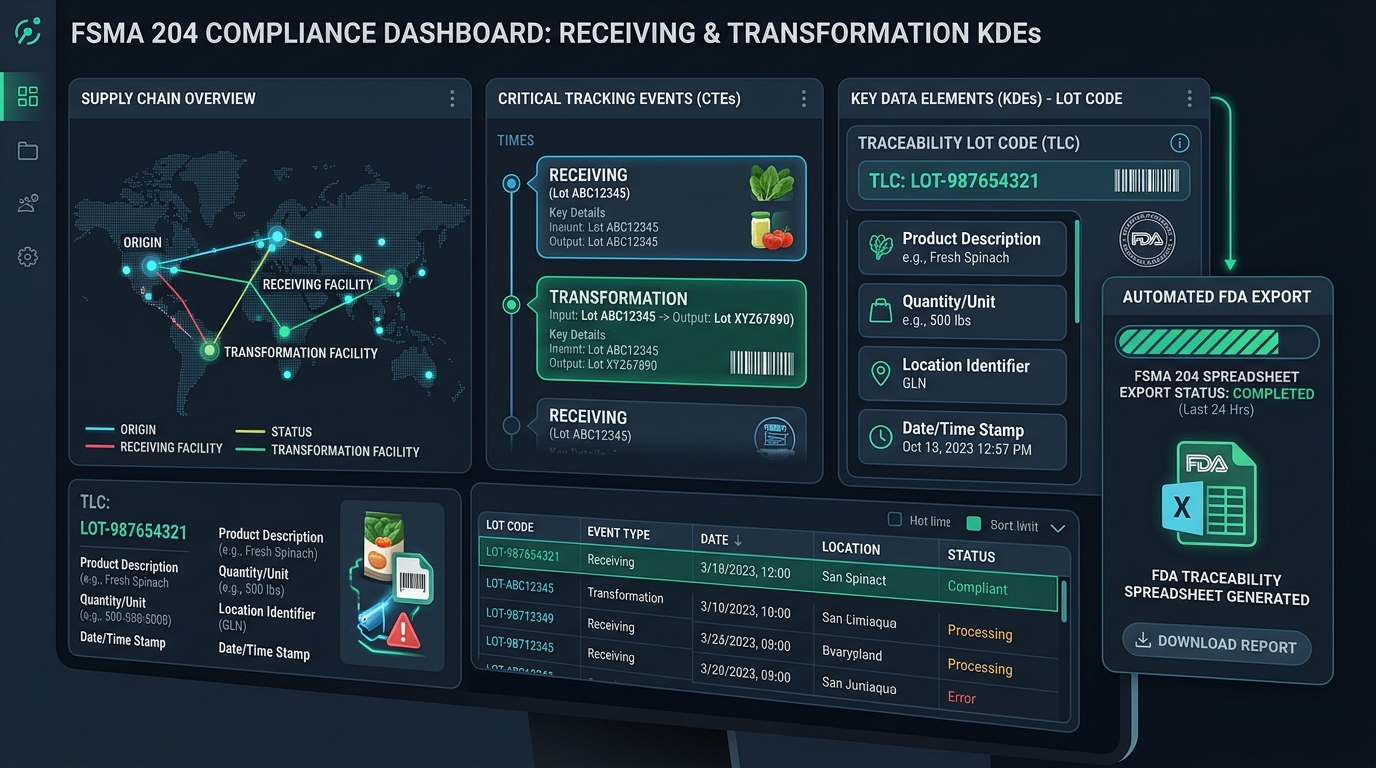
Under the FDA's FSMA 204 rule, leafy greens (including romaine, spinach, kale, and salad mixes) are explicitly listed on the Traceability Food List (TFL). Processors must comply with strict Key Data Element (KDE) tracking:
Initial Packing CTE: Captures the location identifier of the farm, field harvest date, harvest lot code, and commodity description.
Transformation CTE: Captures the raw Traceability Lot Codes (TLCs) fed into the wash line, exact time of processing, new finished product TLC, and total finished package yield.
24-Hour Electronic Sortable Spreadsheet Requirement: In the event of an FDA outbreak investigation, processors must produce an electronic sortable spreadsheet of all CTE/KDE data within 24 hours.
3. Integrating Agricultural Water & CoA Lab Records
Contaminated agricultural water is a leading root cause of field-level E. coli outbreaks. Modern processors enforce strict gatekeeping at raw receipt:
- Pre-Harvest Water Testing Linkage: Certificate of Analysis (CoA) records for irrigation water microbial testing are linked directly to incoming farm lot numbers in the ERP.
- Sanitizer Dosing Automated Logs: Real-time flume water chemistry logs (ppm and pH) are linked to batch transformation records, proving pathogen reduction controls were active during processing.
- Supplier Traceability Verification: Supplier GLN (Global Location Number) and FDA Registration IDs are validated automatically upon dock scan.
4. How Digital ERP Lot Lineage Prevents Over-Inclusive Recalls
When an E. coli positive sample is identified, Zelviq’s 2-way genealogy engine isolates the hazard without shutting down unaffected plant operations:
- Backward Trace (Raw Origin): Pinpoints the exact grower, field location, harvest date, and receiving dock time behind the suspect lot.
- Forward Trace (Finished Distribution): Surfaces every finished salad SKU lot, WIP bin, and customer invoice that touched the suspect raw input within 2 seconds.
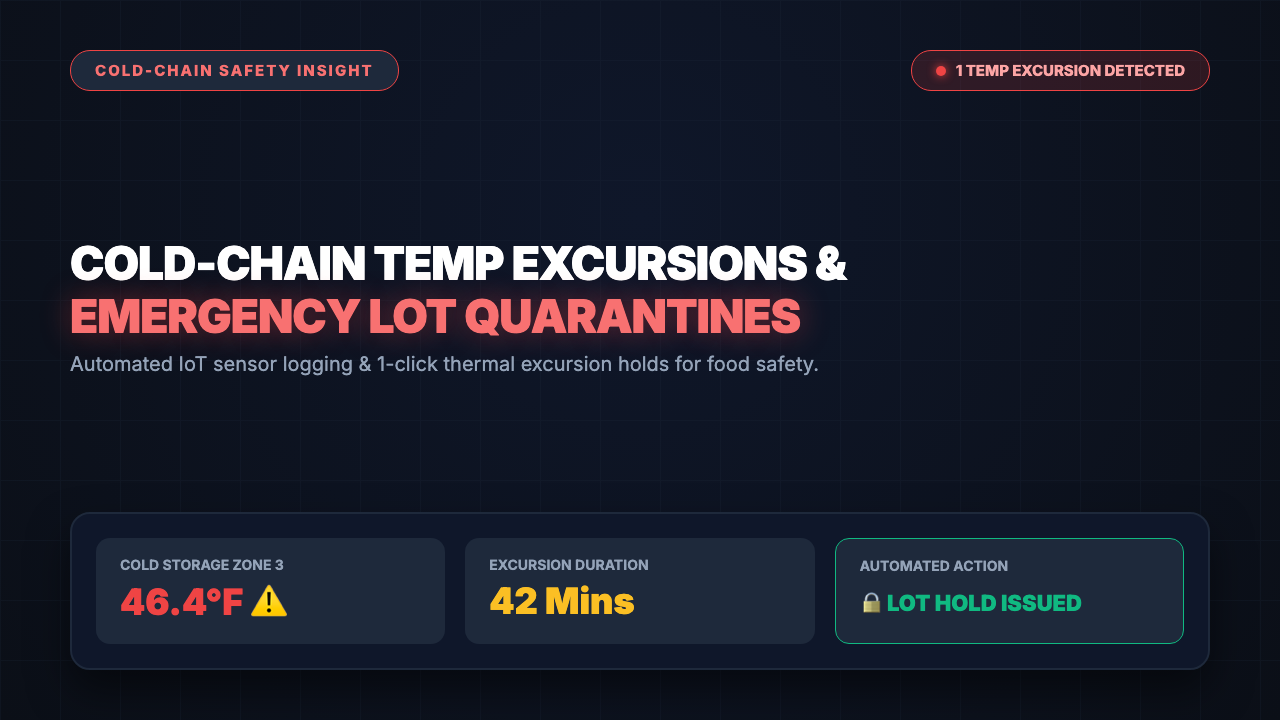
- Precision Quarantine: Locks only the affected finished lot numbers, preventing unnecessary destruction of clean produce batches processed on subsequent sanitized shifts.
Summary
Mitigating E. coli risk in fresh produce requires combining rigorous agricultural water monitoring with digital lot genealogy. By automating FSMA 204 KDE collection and 2-way lot tracing, fresh-cut processors protect public health, comply with FDA mandates, and safeguard operational profitability.
Found this article valuable?
Share it with your operational team and industry peers.