Maintaining cold-chain integrity is one of the most vital responsibilities for fresh dairy, meat, seafood, and fresh-cut produce manufacturers. A single refrigeration compressor failure or dock door left open can cause temperature excursions that accelerate bacterial growth and ruin high-value inventory.
Relying on manual clipboard temperature checks every four hours leaves long blind spots where thermal degradation occurs undetected.
In this guide, we explore how modern processors automate cold-chain temperature monitoring and execute emergency lot holds.
1. Critical Risks in Cold-Chain Operations
Automated Cold-Chain Sensor Alerts & Thermal Excursion Control
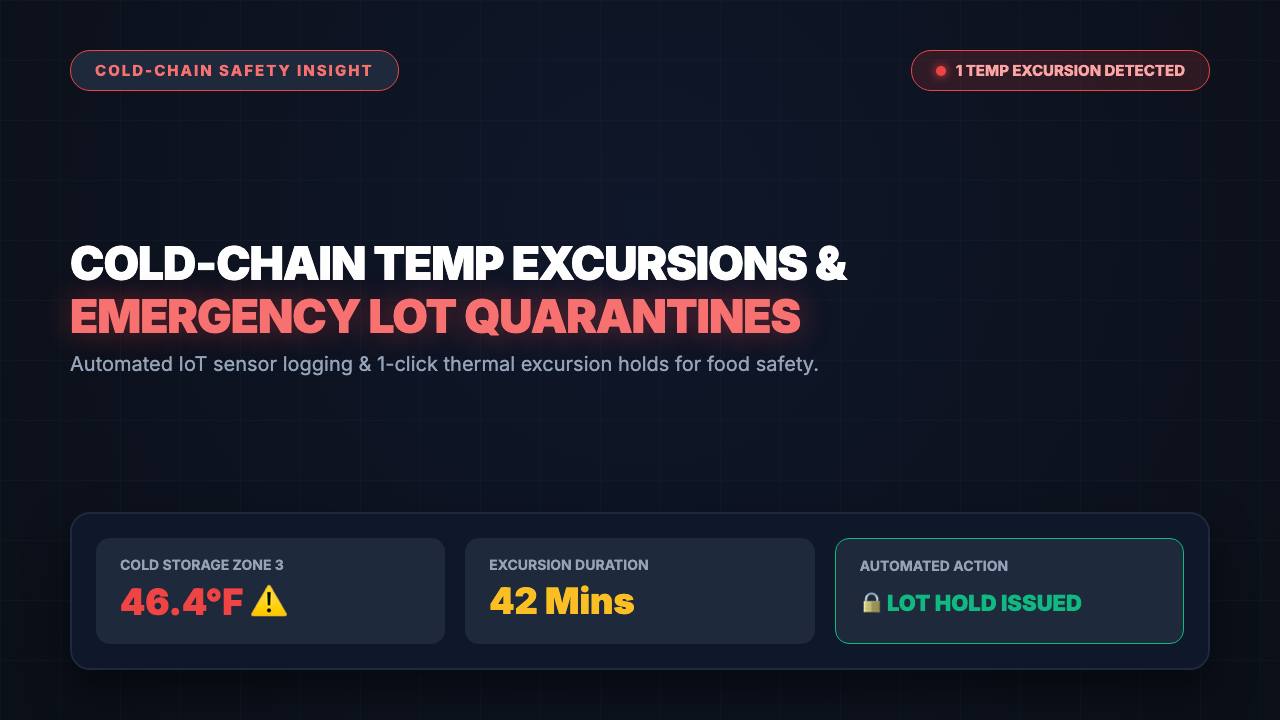
 When cold storage temperatures breach critical control limits (e.g. rising above 38°F for fresh meat), immediate corrective action is required. Continuous IoT sensor logging alerts QA managers in real time, preventing compromised batches from entering production lines.
1-Click Warehouse Excursion Lot Quarantine
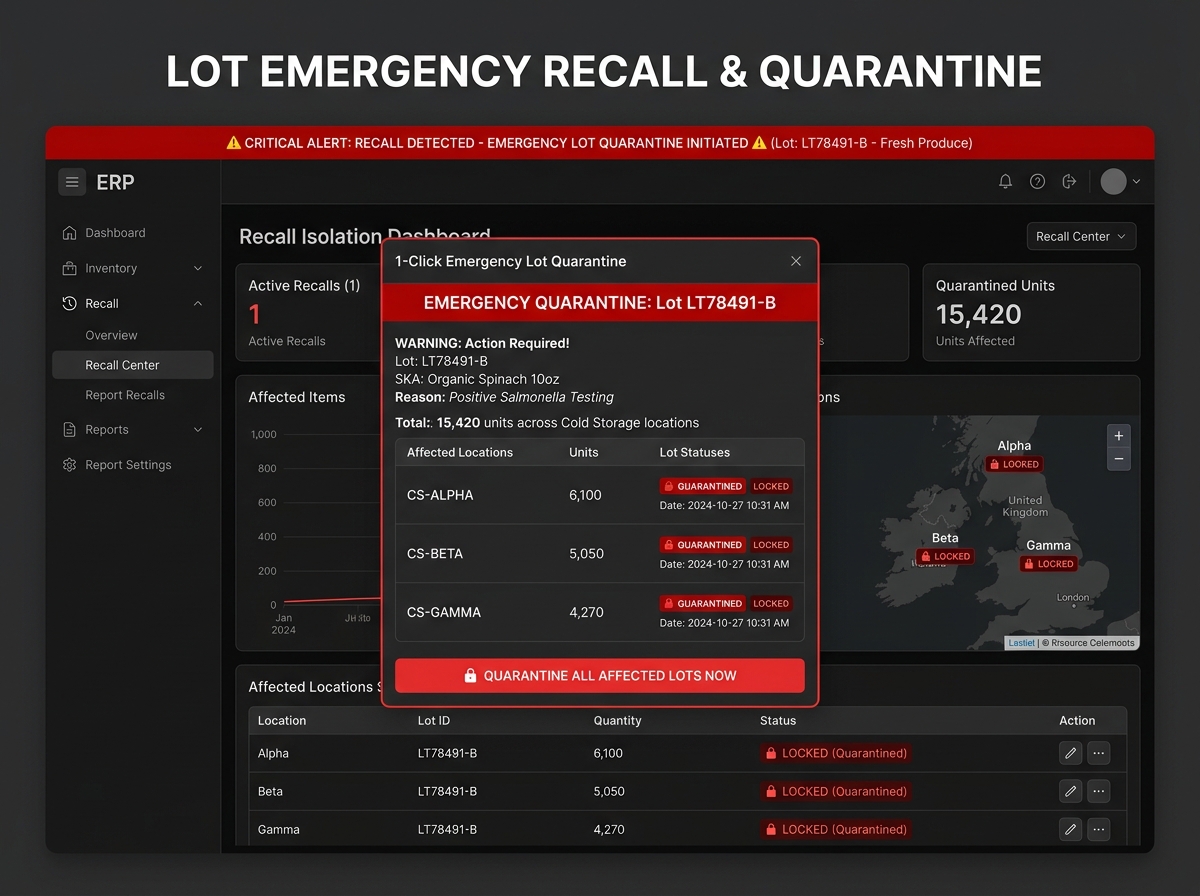 If a cold-room zone suffers an extended thermal excursion, QA leads must quarantine all stored lots instantly. Zelviq enables 1-click lot quarantine across warehouse bins, blocking work order picking and shipping allocations in under 2 seconds.
2. Best Practices for Cold-Chain Management
- Continuous IoT Sensor Logging: Replace paper chart recorders with digital wireless temperature sensors linked directly to ERP storage locations.
- Automated FEFO Picking: Enforce First-Expired, First-Out algorithms to ensure inventory moves through cold rooms before shelf life degrades.
- Instant Lot Hold Protocols: Establish automated rules that freeze lots associated with an excursion zone until QA completes physical re-testing.
3. How Zelviq Controls Cold-Chain Safety
❄️ Protect Cold-Chain Quality & Automate Lot Holds
Monitor warehouse storage zones, enforce FEFO picking, and execute instant 1-click lot quarantines with Zelviq Cloud ERP.
👉 Explore Zelviq Batch Inventory Management | Book a Food Safety Walkthrough
Conclusion
Temperature excursions don't have to turn into catastrophic product recalls. By combining real-time sensor logging with automated FEFO picking and 1-click lot quarantines, food manufacturers protect consumer safety, satisfy GFSI auditors, and preserve bottom-line profitability.
Found this article valuable?
Share it with your operational team and industry peers.