The FDA's Food Safety Modernization Act (FSMA) Section 204 establishes strict traceability requirements for entities manufacturing, processing, packing, or holding foods on the Food Traceability List (FTL).
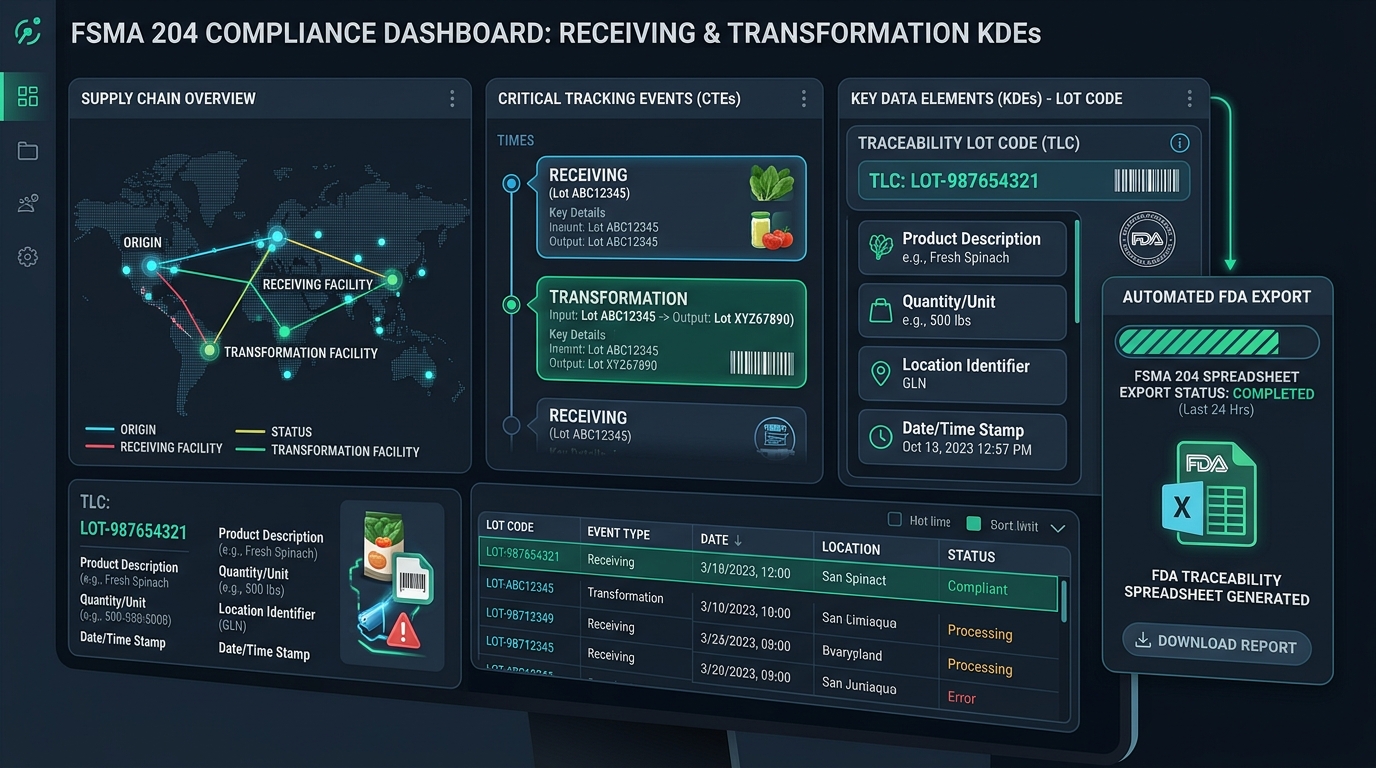
Compliance hinges on capturing Key Data Elements (KDEs) at specific Critical Tracking Events (CTEs) - primarily Receiving, Transformation, and Shipping.
Without automated digital recordkeeping, creating FDA-compliant 24-hour sortable spreadsheets during an audit is practically impossible using paper logs or static spreadsheets.
In this guide, we break down how food processors automate FSMA 204 KDE compliance.
1. Essential Critical Tracking Events for Processors
Receiving & Transformation KDE Digital Capture
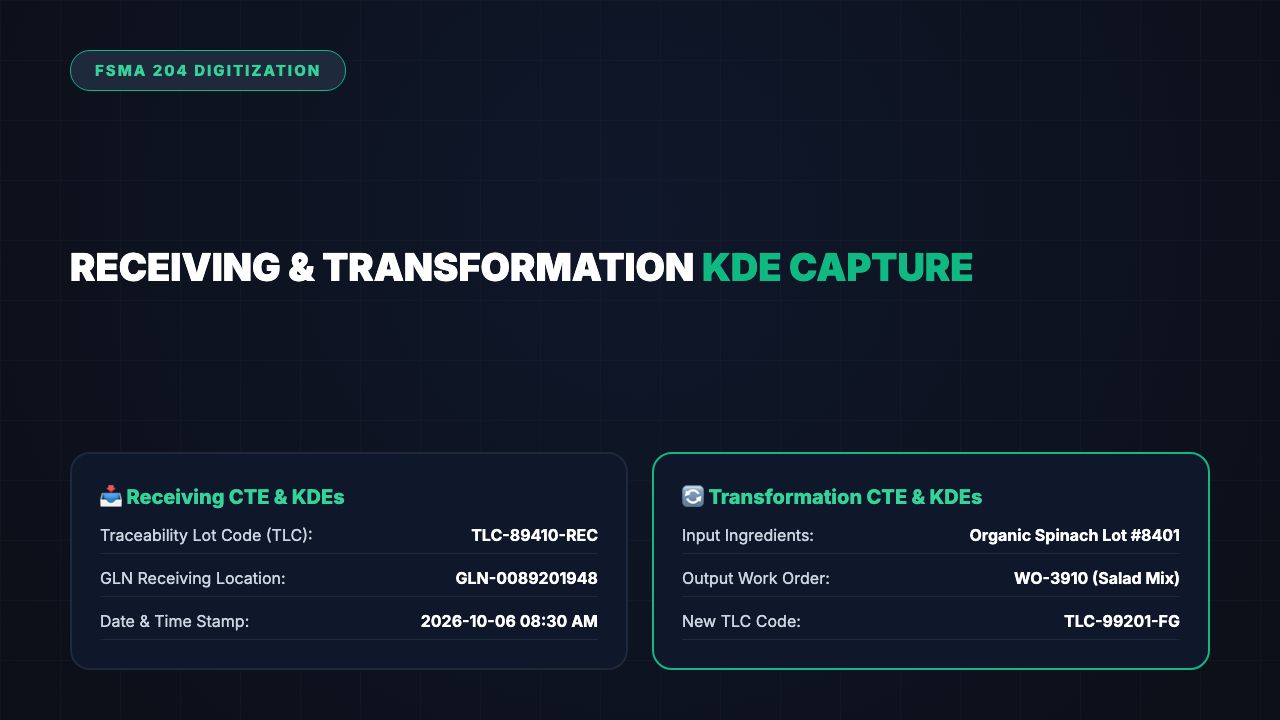 When raw FTL ingredients (such as fresh leafy greens, nut butters, or soft cheeses) arrive at dock receiving, processors must record supplier Traceability Lot Codes (TLC), receiving dates, GLN location identifiers, and unit quantities. During transformation, work orders link input raw material TLCs directly to newly generated finished product TLCs.
24-Hour Automated FDA Spreadsheet Export
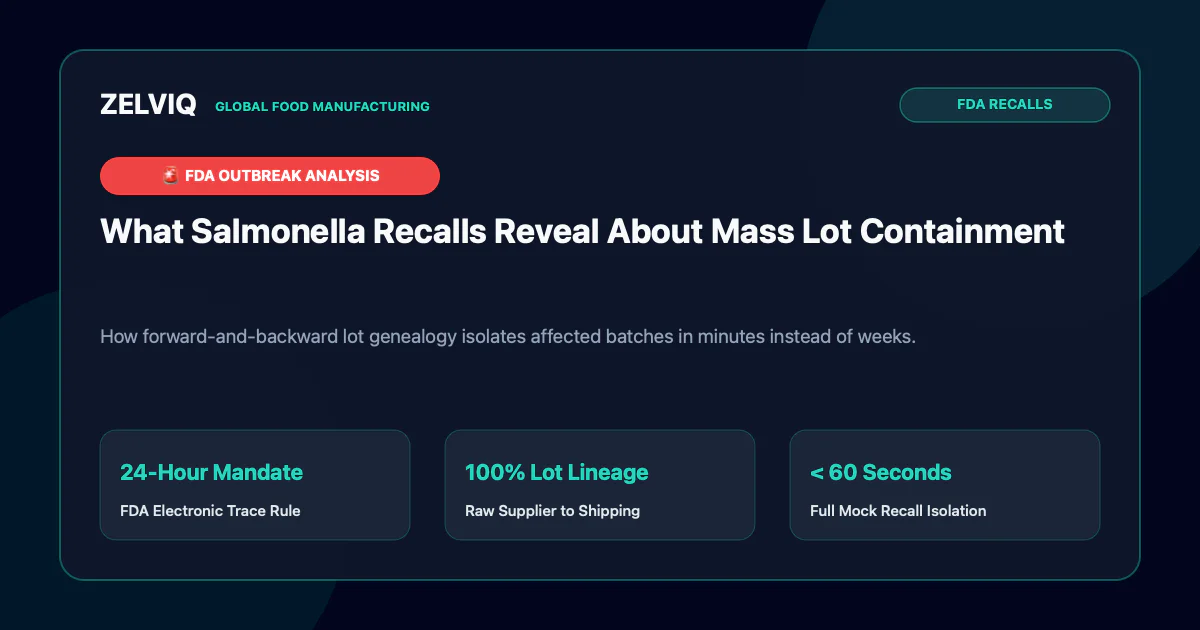
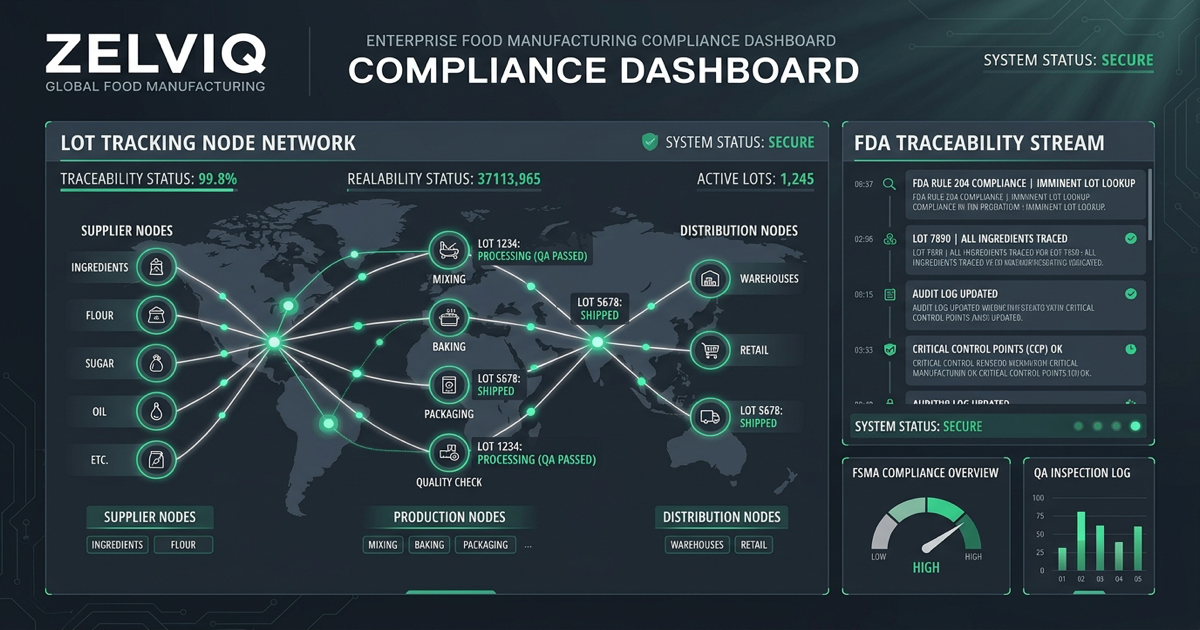 Under FSMA 204, FDA inspectors can request an electronic, sortable spreadsheet containing full KDE lot genealogy during an outbreak investigation. Systems must generate this report in under 24 hours without manual data entry.
2. Best Practices for FSMA 204 Compliance
- Mandatory Dock Barcode Scanning: Scan vendor GS1-128 barcodes at dock receiving to auto-populate Receiving KDE fields without manual typing errors.
- Automated TLC Assignment: Generate compliant Traceability Lot Codes automatically upon work order creation and lot transformation.
- Electronic Record Retention: Retain all KDE records and lot genealogy data in encrypted cloud storage for a minimum of two years.
3. How Zelviq Simplifies FSMA 204
📋 Built-In FSMA 204 KDE Capture & 1-Click FDA Exports
Automate receiving, transformation, and shipping KDE logs while generating 24-hour FDA-compliant spreadsheets instantly with Zelviq.
👉 Explore Zelviq FSMA 204 Traceability Software | Take the Free FSMA 204 Readiness Quiz
Conclusion
FSMA 204 compliance is not optional. By implementing digital KDE capture and automated lot genealogy workflows, food processors eliminate audit anxiety, protect consumer health, and achieve 100% regulatory readiness.
Found this article valuable?
Share it with your operational team and industry peers.