Physical hazard contamination - including metal shavings from worn grinder blades, stainless steel wire from sifter screens, and glass fragments from packaging lines - accounts for nearly 15% of all FDA and USDA food recalls. Unlike microbial contamination, which often incubates over days, a foreign body incident occurs in milliseconds when inline inspection equipment or operating procedures fail.
For high-velocity batch food processors (bakery dough, sauce filling, ground meat, pet food, and dry spice blending), passing SQF Edition 9, BRCGS Issue 9, and FSSC 22000 audits requires proving that inline metal detectors and X-ray inspection systems are continuously calibrated, challenged with certified test pieces, and backed by immediate lot quarantine controls.
In this guide, we analyze the operational breakdown behind foreign body recalls, break down critical control point (CCP) verification requirements, and explore how digital ERP logging protects your brand from physical hazard market withdrawals.
1. The Anatomy of a Foreign Body Contamination Incident
Foreign object hazards enter production lines through three primary vectors:
+-----------------------------------------------------------------------------+
|                     FOREIGN OBJECT CONTAMINATION VECTORS                    |
+-----------------------------------------------------------------------------+
|  [Raw Material Ingestion]  -->  [Mechanical Wear/Shear]  --> [Packaging Line] |
|   (Unfiltered Bulk Totes)       (Grinders, Mixers, Sifters)   (Glass/Hard Caps)
+-----------------------------------------------------------------------------+
                                       |
                                       v
+-----------------------------------------------------------------------------+
|  [Inline Metal Detector / X-Ray System]  --> [Rejection Mechanism & Hold]   |
|   (Hourly CCP Test Piece Challenge)          (Automated Work Order Lock)    |
+-----------------------------------------------------------------------------+
Key Risk Points:
- Unverified Bulk Receipts: Raw agricultural commodities (nuts, grains, flour) arriving without upstream magnet passes or sieve verification.
- Mechanical Fatigue: Mixers, emulsifiers, and high-shear blades wearing down under continuous operational stress, shedding microscopic or macro metal fragments into WIP batches.
- Undocumented Test Piece Challenges: If an operator skips an hourly test piece challenge (ferrous, non-ferrous, and stainless steel rods), every container produced since the last valid check is legally deemed uninspected and subject to recall.
2. SQF & BRCGS Audit Requirements for CCP Metal Detection
International Food Safety Initiative (GFSI) benchmarked standards dictate rigid protocols for managing physical hazard inspection points:
SQF Code Edition 9 (Section 2.5.4): Requires metal detectors and X-ray systems to be identified as Critical Control Points (CCPs) with documented monitoring frequency, operational limits, reject mechanism testing, and corrective action protocols.
BRCGS Food Safety Issue 9 (Section 5.5): Mandates that reject mechanisms (air blast, push arm, or drop flap) be tested automatically to confirm suspect products are physically diverted into a locked rejection bin.
3. Why Paper CCP Logs Fail During Inspections
Traditional processing plants track metal detector challenges using clipboard sheets attached to line guardrails. This manual workflow creates severe audit vulnerabilities:
- Pencil-Whipping: Operators signing off hourly checks at the end of a shift rather than at the exact time of execution.
- Missing Correction Records: Failing to document what happened to product run between a failed test piece challenge and the previous successful check.
- Disconnected Lot Genealogy: Inability to quickly map an inline reject timestamp to the specific raw material supplier lot or customer shipment.
4. How Digital CCP Logging & Instant Lot Hold Works
Modern manufacturing ERP software integrates CCP verification directly into digital batch execution:
- Mandatory Line Startup Challenge: Work orders cannot transition to
in_progressstatus until operators log a successful 3-point test piece check (Ferrous 1.5mm, Non-Ferrous 2.0mm, Stainless Steel 2.5mm). - Automated Rejection Counter & Alarm Thresholds: If inline reject counts exceed baseline tolerances within a 15-minute window, the system automatically pauses line conveyors and alerts QA leads.
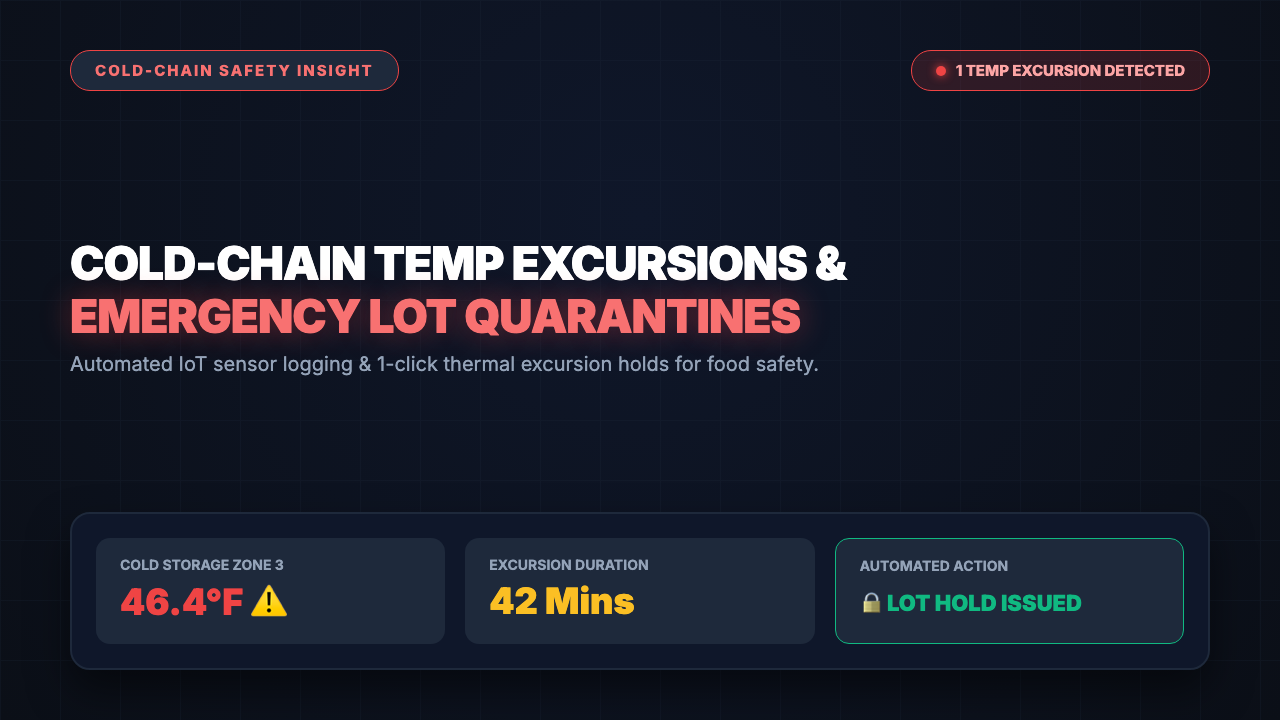
- 1-Click Emergency Lot Quarantine: If a metal fragment is confirmed in a finished container, placing the batch on digital quarantine freezes all associated pallets across cold storage and warehouse bays in under 2 seconds.
5. Audit Preparedness Checklist
Ensure your facility is protected against foreign body recalls:
- Enforce Timed CCP Challenges: Require digital sign-offs at shift startup, hourly intervals, shift changeovers, and following any equipment stoppage.
- Automate Reject Bin Lockout: Ensure rejection collection bins are locked and accessible only by authorized QA personnel.
- Digitize Corrective Action Logs: Record exact re-inspection results for all diverted containers before product release.
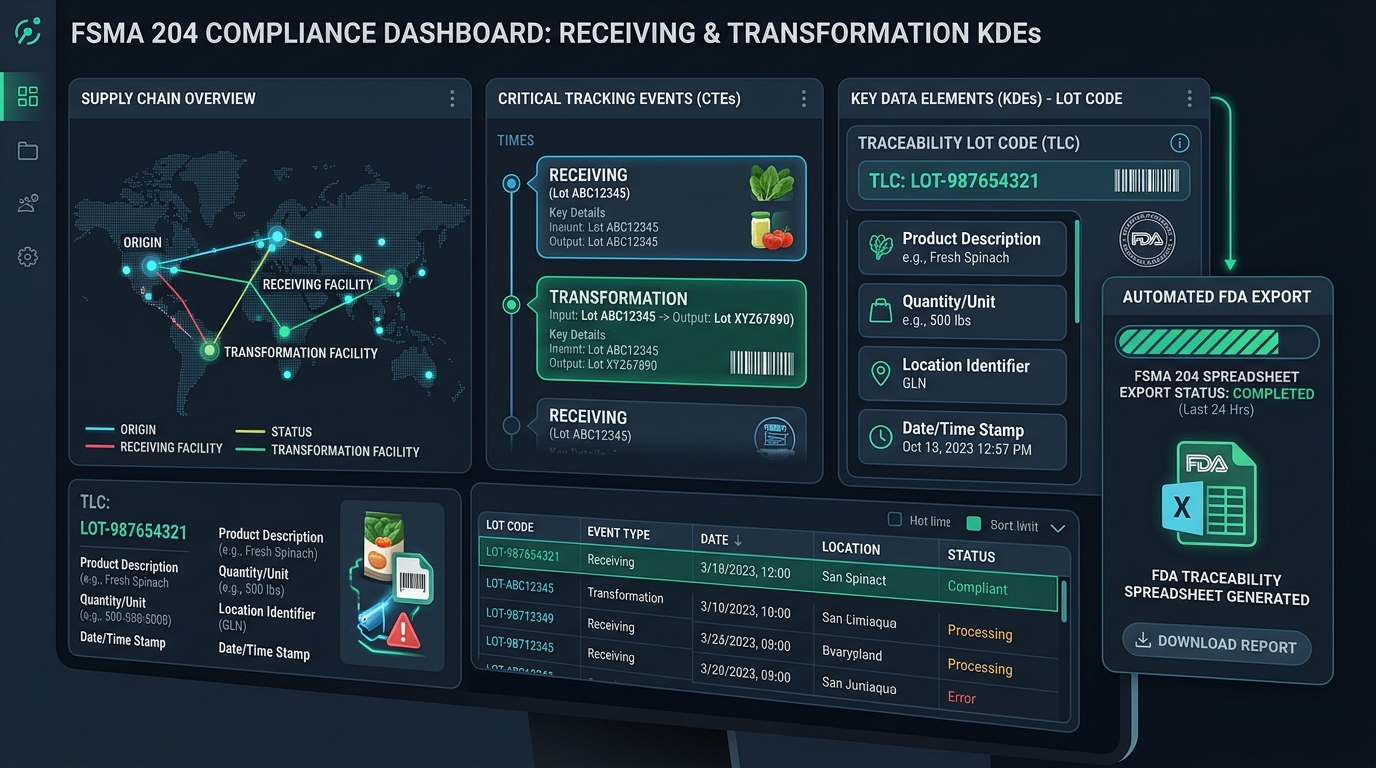
- Verify Bidirectional Traceability: Ensure your ERP links metal detector line logs directly to raw lot codes and finished shipping manifests.
Conclusion
Foreign object recalls are entirely preventable with disciplined CCP monitoring. By transitioning from paper clipboard logs to automated digital inspection workflows, food manufacturers ensure SQF compliance, eliminate physical hazard liabilities, and protect consumer trust.
Found this article valuable?
Share it with your operational team and industry peers.