In generic manufacturing and retail distribution, FIFO (First In, First Out) has long been the default inventory management principle. The premise is simple: items received first should be shipped or consumed first to ensure stock turnover.
However, in food, beverage, and batch chemical manufacturing, FIFO is fundamentally flawed. Ingredients and perishable inputs do not expire in the order they arrive at your receiving dock. Differences in supplier lead times, transit temperatures, and crop harvest dates mean that a shipment received today may expire before a shipment received last week.
Transitioning from FIFO to FEFO (First-Expired, First-Out) is one of the single most impactful operational shifts a food processor can make. In this guide, we break down the operational differences, evaluate the impact on Cost of Goods Sold (COGS), and detail how to implement automated FEFO picking rules.
1. Comparing FIFO vs. FEFO in Food Processing
To understand why FIFO creates hidden financial bleed, let us contrast how FIFO and FEFO handle identical inventory scenarios.
| Dimension | FIFO (First In, First Out) | FEFO (First-Expired, First-Out) |
|---|---|---|
| Primary Picking Metric | Date Received / Dock Timestamp | Expiration Date / Best-By Date |
| Suitability | Non-perishable hardware, dry goods | Food, beverage, pharma, cosmetics |
| Spoilage Reduction | Low (ignores raw ingredient shelf life) | High (prioritizes shortest remaining shelf life) |
| Retail GRSL Compliance | Vulnerable to short-date rejections | Enforces account-specific shelf-life rules |
| Audit Traceability | Basic sequence tracking | Full FEFO lot-level genealogy |
2. The Financial Cost of FIFO: Spoilage & Chargebacks
Using FIFO in a batch food manufacturing facility impacts profitability in two primary ways:
A. Raw Material & Ingredient Write-Offs
When ingredients sit in ambient or refrigerated storage past their usable expiration date, they must be scrapped. These write-offs directly inflate your Cost of Goods Sold (COGS) and distort batch yield variance calculations.
  +------------------------------------------------------------------------+
  |                   COGS SPOILAGE IMPACT CALCULATION                     |
  +------------------------------------------------------------------------+
  |  Monthly Raw Material Spend:      $500,000                             |
  |  Average FIFO Spoilage Waste:     3.5%                                 |
  |  --------------------------------------------------------------------  |
  |  Annual Direct Material Scrap:    $210,000 / year                      |
  +------------------------------------------------------------------------+
B. Retail Buyer Rejections & Short-Shelf Chargebacks
Enterprise grocery chains and distributors (e.g., Whole Foods, UNFI, KeHE, Costco) enforce strict Guaranteed Remaining Shelf Life (GRSL) clauses. If a shipped lot arrives with less than 65%–75% of its total shelf life remaining:
- The shipment is rejected at the distributor cross-dock.
- The manufacturer absorbs return freight and destruction fees.
- Financial penalties and vendor scorecards damage retail distribution contracts.
3. How Automated FEFO Picking Works in Practice
Implementing FEFO manually using paper tags or spreadsheets is nearly impossible at scale. High-velocity plants process dozens of raw material lots across multiple production lines daily.
Modern ERP software automates FEFO through real-time inventory rules:
+-----------------------------------------------------------------------------+
|                     AUTOMATED FEFO LOT PICKING ENGINE                       |
+-----------------------------------------------------------------------------+
| Work Order: WO-2026-9021 (Organic Apple Cider 16oz)                        |
| Required Ingredient: Organic Concentrate (500 gal)                          |
+-----------------------------------------------------------------------------+
| Available Lots in Warehouse:                                                |
|  - Lot #C-801 | Recv: Aug 10 | Exp: Oct 30 | Qty: 300 gal                   |
|  - Lot #C-844 | Recv: Aug 25 | Exp: Sep 15 | Qty: 600 gal <-- FEFO SELECTED  |
|  - Lot #C-890 | Recv: Sep 01 | Exp: Nov 15 | Qty: 400 gal                   |
+-----------------------------------------------------------------------------+
| System Recommendation: Pick Lot #C-844 (Expires in 4 days)                  |
+-----------------------------------------------------------------------------+
The FEFO Selection Algorithm:
- Filter Active Lots: Exclude lots currently under QA hold or quarantine.
- Sort by Expiration Date: Identify lots closest to expiration (
expires_at ASC). - Verify Yield & Quantity Constraints: Match required batch quantities while minimizing split-lot friction.
- Enforce Customer GRSL (for Sales Orders): Cross-reference customer account rules to ensure the selected finished goods lot meets the buyer's minimum remaining days threshold.
4. Implementation Steps: Moving from FIFO to FEFO
Transitioning your plant from FIFO to automated FEFO requires aligning warehouse processes, barcode scanning, and ERP logic:
- Standardize Lot Expiry Capture at Receiving: Ensure every purchase order receipt captures the manufacturer lot code and expiration date before items move to storage locations.
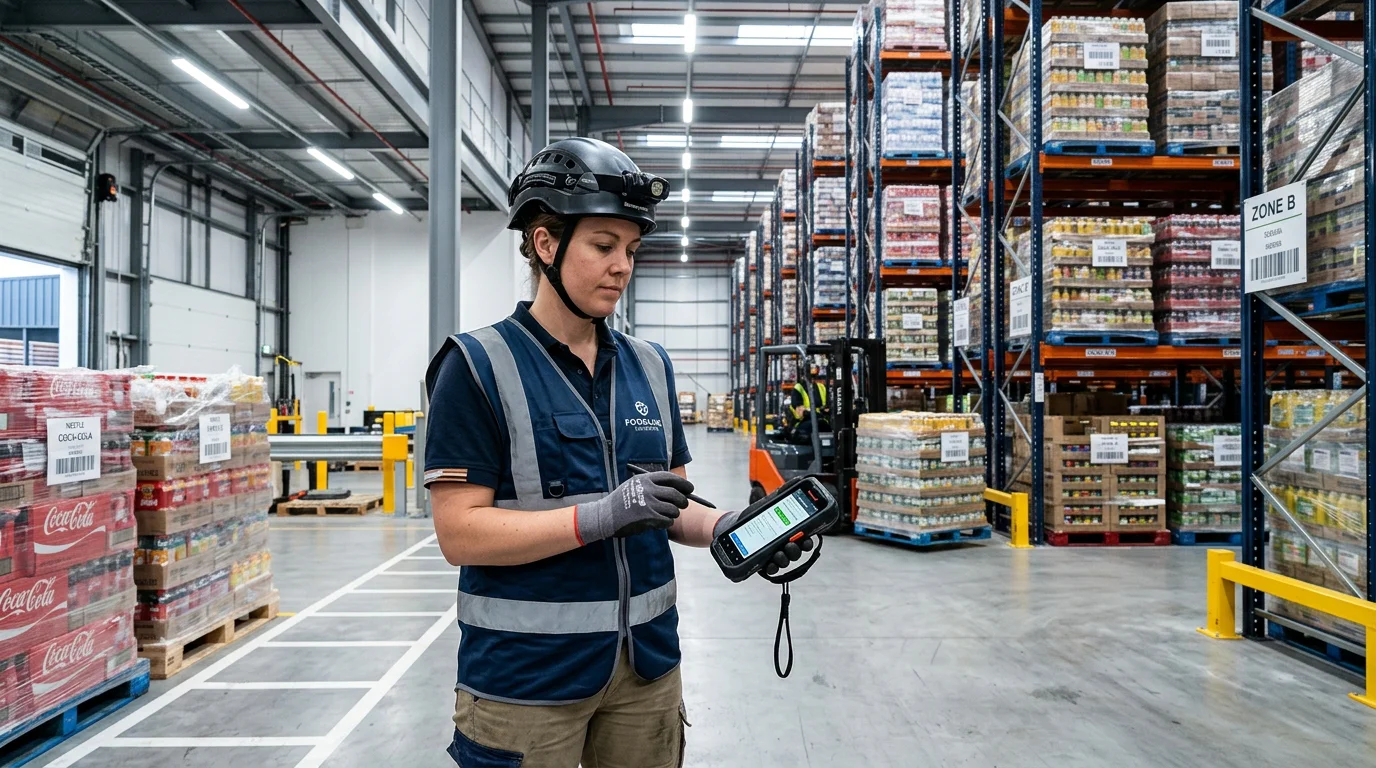
- Deploy Mobile Barcode Scanning: Equip warehouse operators with handheld scanners. Scanners direct operators to the exact bin location of the FEFO-selected lot.
- Configure Customer-Specific Rules: Set up shelf-life rules per customer tier (e.g., Direct-to-Consumer requires 30 days remaining; Wholesale Distributor requires 90 days).
- Monitor FEFO Adherence Metrics: Track compliance percentages. If an operator overrides a FEFO pick recommendation, require a supervisor reason code (e.g., "Pallet Damaged", "QA Inspection Pending").
Conclusion
In food and beverage manufacturing, FEFO is not just a warehouse preference. It is an essential operational discipline. By shifting from FIFO to automated FEFO stock rotation, manufacturers eliminate ingredient waste, maintain customer trust, and build audit-proof lot traceability across every batch.
Found this article valuable?
Share it with your operational team and industry peers.